

Genny Schorr Sees Glitter on the Sidewalk and Stars in Her Eyes in Her New Book, All Roads Lead to Punk
Interview By: Jen B. Larson
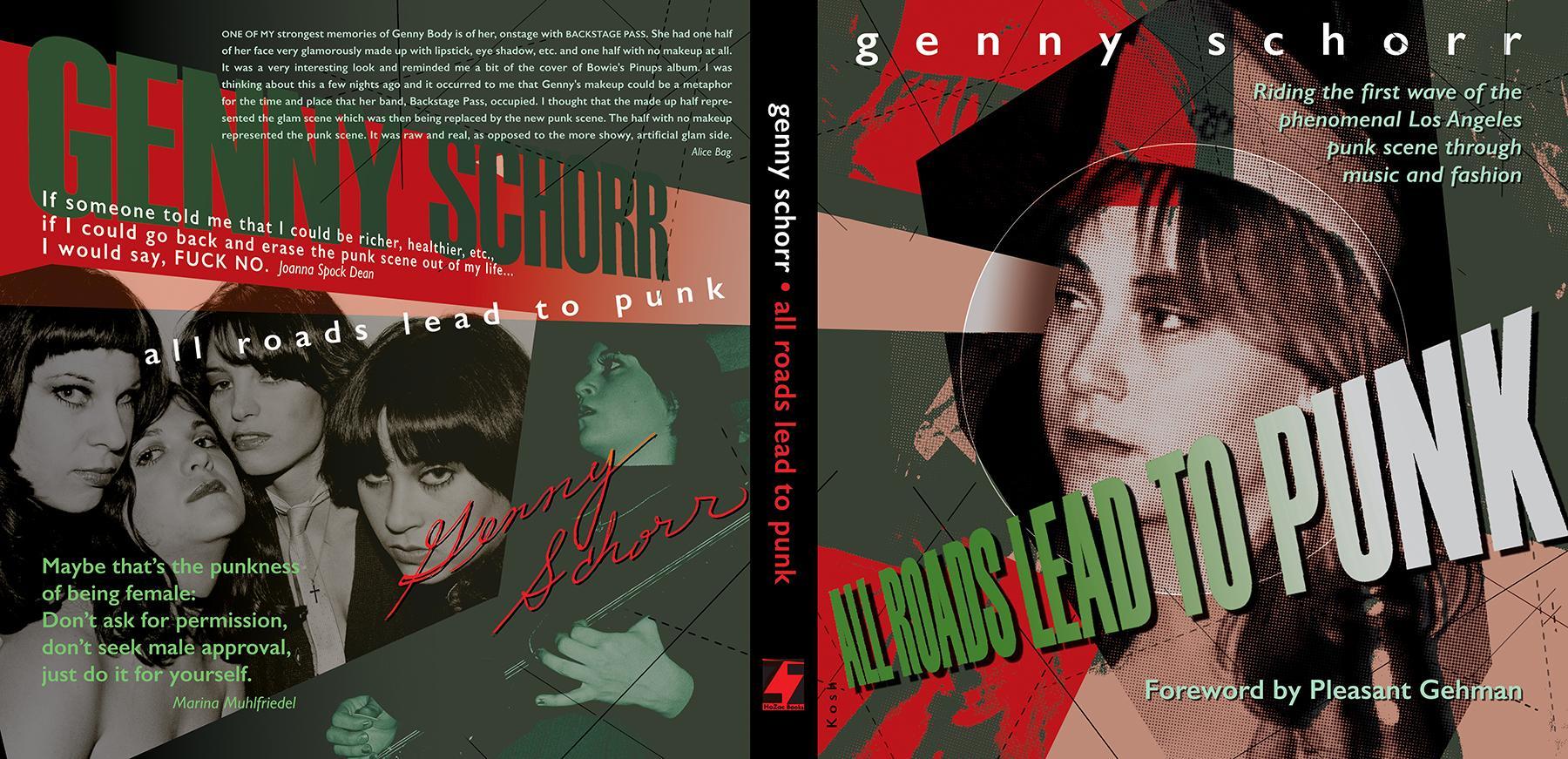
Genny Schorr played guitar in one of the first-ever self-made, female-led punk bands in Los Angeles during the 1970s. Alongside her bandmates and apart from playing in bands, she and other girls on the Hollywood scene made things happen: co-signing on the lease for the Masque, documenting the scene through photographs, and creating and distributing flyers for shows.
In her memoir, All Roads Lead to Punk, Genny traces her story from her childhood, to the difficult loss of her mother, her party girl era, joining Backstage Pass, and working as a professional rock ‘n’ roll stylist for the stars before leaving the music scene altogether. In this candid memoir, she shares stories from 30 years of rock ‘n’ roll fun and friendship, including falling in and out of love, as well as her experiences on the road as a stylist for the Bangles and Linda Ronstadt.
The book, published by Hozac Books, comes with a limited edition Backstage Pass 45. You can preorder it here. All proceeds from the book will benefit Junior High LA, a nonprofit multipurpose gallery and events space for LGBT+ artists, which hosts a wide array of programming and services.
I’m fortunate to call Genny a friend and got a chance to connect with her about the book over Zoom earlier this month. The interview was edited for length and clarity.
JBL: There are so many things I love about this book just upon opening it. That your good friend Pleasant Gehman wrote the foreword, your dedication to your lifelong pal and former bandmate Joanna “Spock” Dean, and then there’s the quote by another good friend and former member of Backstage Pass, Marina Del Ray, where she says, “Maybe that’s the punkness of being female: Don’t ask for permission, don’t seek male approval, just do it for yourself.”
GS: Marina’s a great writer. She’s been writing for so long. She started off at Teen Magazine as a rock journalist. She was reviewing the Runaways show, and I think she thought it would be a different experience. I think she came to appreciate that lineup later, but at the time, I think she felt they were just pandering to get the attention of a male audience. She was saying, like, you don’t need to have a Kim Fowley or a Svengali.
JBL: I hadn’t fully realized you had met them when you were so young, and they were already established in their careers.
GS: Marina has this whole history of Spock before me. I think Spock turned her onto a bunch of people when she went to England. She was like, “you gotta look this person up,” which she did. Spock was a major groupie in the golden era of groupies during the time of all these heavy-duty rock bands like Zeppelin and Rainbow in the ‘70s. Then later– after Backstage Pass– she was managing bands in the Paisley Underground era, and she worked for one of the record labels. I was the baby of Backstage Pass. I’m 5 or 6 years younger than them. I met Marina at the Dr. Feelgood show. She was enlisting her friends to be in a band, and I was desperately wanting to be in one.
JBL: Why did you decide to write the book? Was it cathartic, or did you want to tell a specific story – or maybe a little of both?
GS: Marina started doing these Our Lips Unsealed shows featuring rock ‘n’ roll stories. In the beginning, I was part of that. I want to say the first one was in 2018. I started writing these stories for it. First, it was the Elvis to Elvis chapter and the Linda Ronstadt stories. I just kept writing, and then after a while, I started revisiting them. Some of the writing seemed kitsch to me, and I was like, “I gotta do this a little differently.” I would probably still be redoing them a bit. Even as I’m editing some of the stories to tell them live again for both the book signings I’m doing and another Our Lips Unsealed show. I’m like, “I think I would rewrite this a little bit…” It’s like, it never ends.
JBL: I know the feeling…
GS: You have to call it a day at some point. But that’s where it all came out of… doing them live. I think I wrote some of this stuff up as a play a while ago. I think I was named Misty or something crazy like that. But I really started to formulate this stuff for the Our Lips Unsealed show. Just writing them and doing them live.
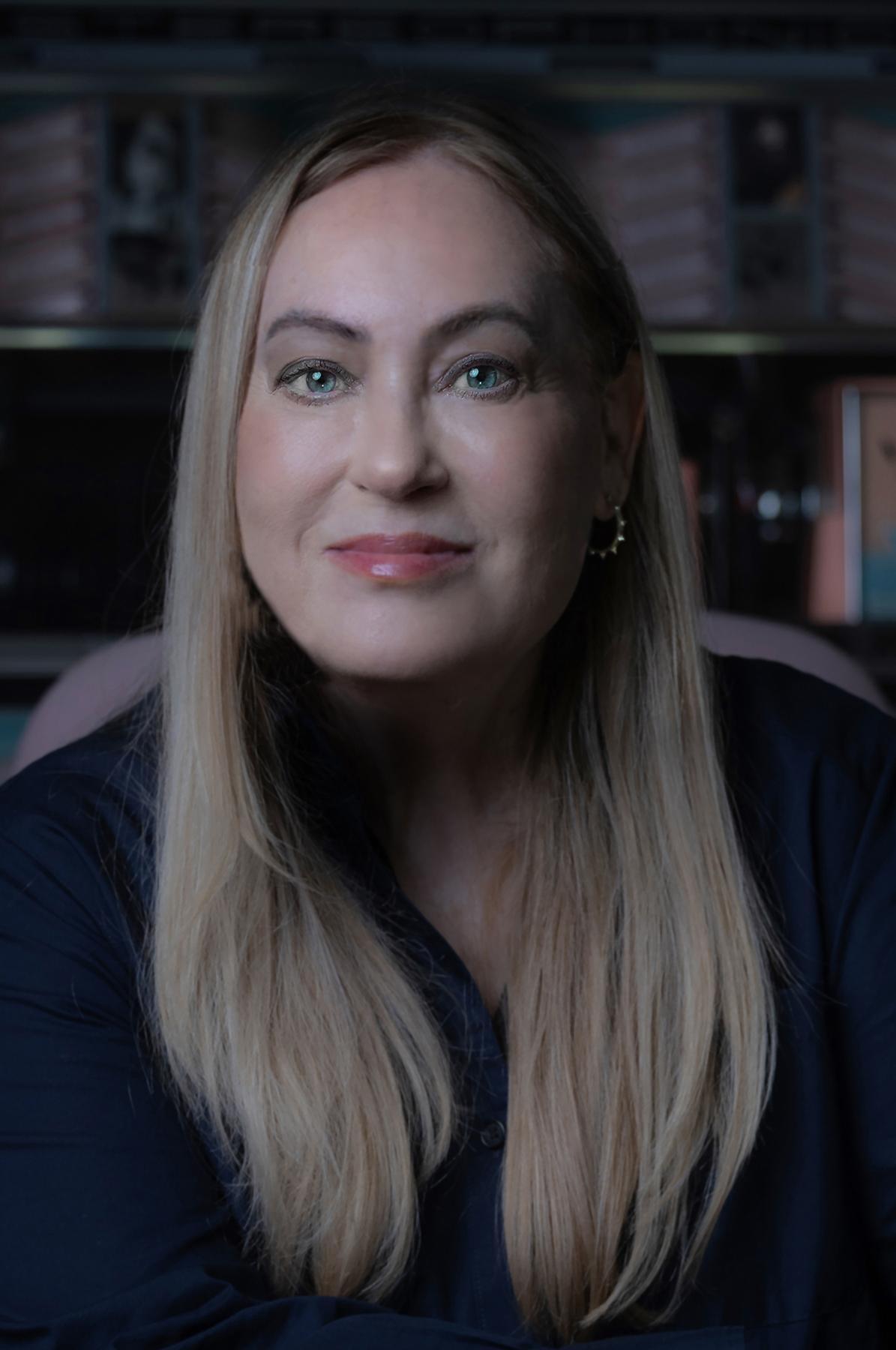
JBL: When did you recognize that you had so many great stories to tell?
GS: I think little by little, as I started writing more of them. Then we were doing these live shows, and then it was Covid, and one of the places we were performing in Santa Monica, they either changed hands or shut down, so we had to find another outlet for it. She found a new home for it at Tom Bergin’s. It’ll be me, Kristian Hoffman from the Mumps, Cliff Roman from the
Weirdos, Dean Chamberlain from Code Blue, Azalia Snail, and some others on September 20th.
JBL: Did you start remembering more stories as you were writing them?
GS: I always knew these stories. I just started writing more of them down, thinking I would be doing more shows. Then I tried to get other shows, but the storytelling world is kinda weird. They’re almost like comedians or something, and that’s just like, not who I am. They also like you to memorize everything, you know, have this whole act. I kinda tried to do that for a bit, but I was like, “That’s not really me.” After and during COVID, I was paranoid to do stuff in public, too.
I guess, maybe when I got with Kosh, I started working on them. It started to come together as a real thing. It’s been a really lengthy process. This whole thing, up to getting the books published.
JBL: I definitely understand that. Were the stories based on memories you would casually talk about with friends?
I have to say that when I left the music industry, I didn’t talk about this stuff for that whole time. I was parenting and working in health care. I never talked about any of it. Occasionally, I would say a little something, and people would be like, “Oh, don’t you miss that? Why are you doing this?” So I didn’t really talk about it for a decade.
I had to like that girl again. My life changed overnight when my mom died. I felt like I compromised myself so much in so many different ways, so I had to have empathy for that little girl who lost her mom. So it took me a while to empathize with myself and all of the things. After Eden grew up, I started looking at it again and being a little kinder.
When I turned 30, I went to therapy, and I had a really good therapist. I had a really shitty therapist once. But like, when I felt so guilty about stuff having to do with my mom – wanting to do ballet and being a brat, and not taking care of her when she was sick, and she said, “That’s so age-appropriate. You were totally being normal.” It was so freeing.
JBL: When did you start telling Eden about your rock ‘n’ roll past? (Eden is Genny’s kid.)
GS: I think like different stages of their development. They came with me to a Squeeze concert in, I want to say, 2010, so they were like 12 or something. Different phases.
JBL: And now Eden’s a musician.
GS: My second husband was a musician as well. Eden was very fortunate that they got a lot of encouragement in that direction. I got a fair amount of encouragement from my parents also. Lessons, and they bought me guitars, surprisingly. My dad played guitar a little bit and banjo. Eden was immediately talented, both as a young songwriter and guitar player. It was an easy fit. They went to a rock ‘n’ roll camp and all kinds of stuff. Later they formed a band called The
Love-Inns and they used to practice in my garage. It was amazing!
JBL: Speaking of your parents, something I learned from the book is that they were activists. Do you remember what kind of stuff they were getting into?
GS: They were both born in New York, and they both served in World War II. My mom was a communist when it was liberal. I remember she was always on strike. It was kind of like The Way We Were movie, that Barbara Streisand character. They had to burn her books at some point. And she was engaged to be married, and her boyfriend turned out to be gay. She had a broken heart and enlisted as a WAC in World War II.
My father was also in World War II. He was seeing Lenny Bruce and he was into On the Road by Jack Kerouac. She would smoke reefer and go see Billie Holiday. They were born in 1921 and 1922. They met here, on the West Coast. Everyone was coming out here for the weather.
My recollection was that they were always listening to the news. I strongly recall our governor was Ronald Reagan. My mother hated him, and she would always say, “He always comes up smelling like a rose!” And it was the Nixon era. At that time, they were into the anti-war movement. I think if my parents were a little younger, they would have been hippies. They were doing experimental things. Yet they were raising kids. I wanted to write more about this, and I started to, but I thought it wouldn’t be totally right for the book.
JBL: Well, this interview is a great venue for it.
GS: So, yeah, they were very political. And they were doing experimental things. My mother was really into doing mismatched patterns in her decorating. She was thrifting very early on, buying stuff in junk stores and reupholstering it. They would have parties where she would put pillows on the floor, and they would blindfold and touch each other, like they were doing weird stuff.
When we were little, my father was a swimming teacher, then a gym teacher, and then a math teacher. He took a sabbatical and got his marriage and family license, and then he worked in Watts for a while, like during the Watts riots and stuff. They took us to San Francisco, and we went to Love-Ins. She let us get our ears pierced in Greenwich Village. They were really cool. It’s a pity my mom’s been gone for 50 years this past July.
JBL: I love that story in the book where, when you were a kid, you randomly saw Bob Dylan. You’re like this magnet for creative, famous people, and it started when you were a child.
GS: It’s true. And, like, I saw the band the Animals in an elevator at our hotel. That Bob Dylan story really stuck with us – my mom shouting, “There’s Robert Zimmerman!” and we were like, so embarrassed.
JBL: I also took note that, of course, like most truly cool people, you didn’t fit in during high school.
GS: [Laughs] No, I didn’t. When I got my first telephone in junior high – my parents let me get my own telephone in junior high – my grades sort of went “pewww” (makes falling anvil drop sound with mouth). It was this pink princess phone. Then, in high school, a rift began to form. It was very patriarchal. The guys I went to school with who were musicians were in the beginning of the band Toto… I’d bring my guitar to school, and they didn’t like the idea of a girl playing electric guitar.
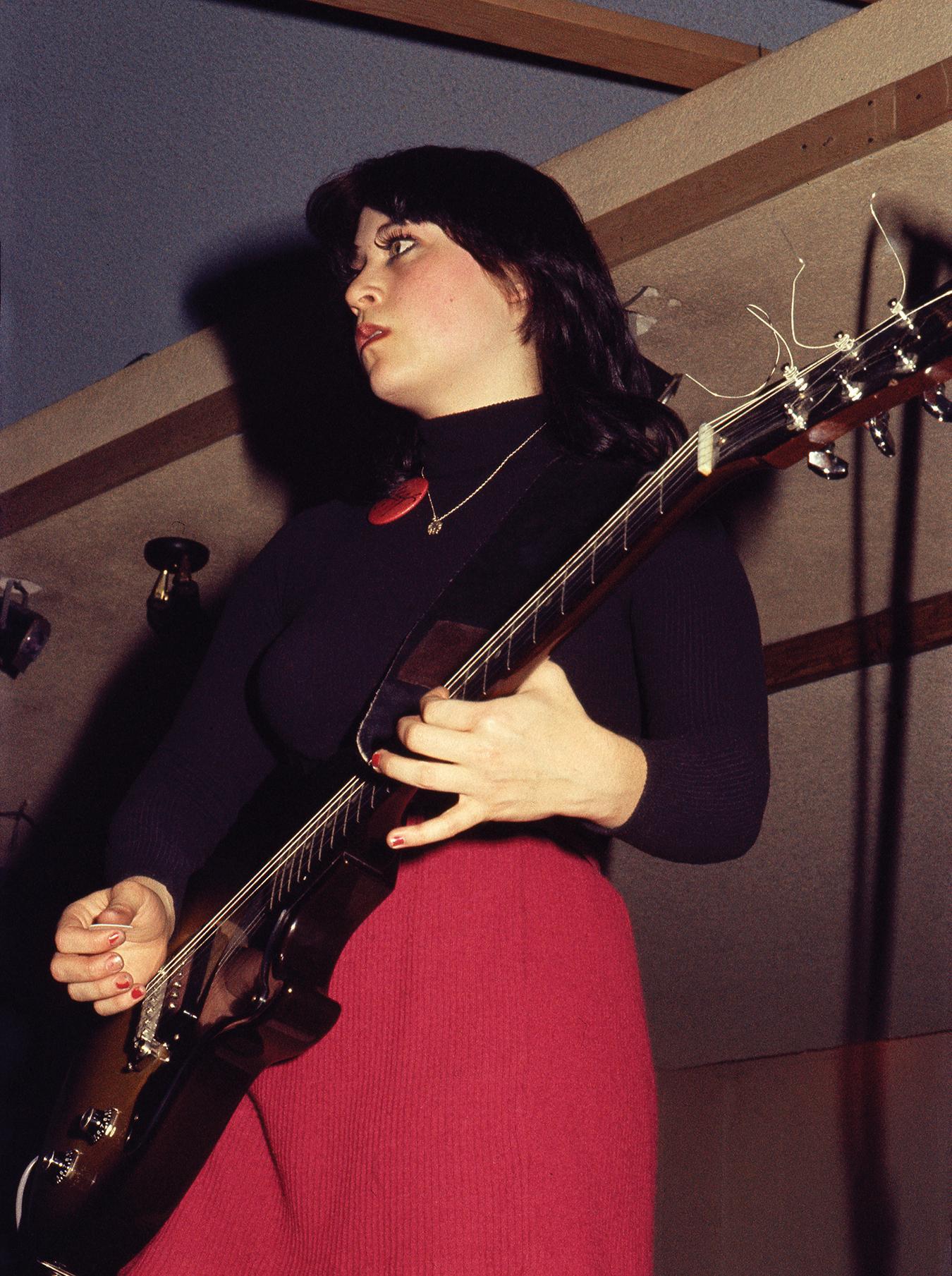
JBL: Speaking of douchey guys, Kim Fowley was a total prick to you more than once when you were pretty young. You wrote in the book about how he ignored your guitar playing in your audition for the Runaways and commented on your weight, then outed you as bi for laughs from a crowd…
GS: That was at a Rhino Records event. I was white as a ghost. You don’t want to be outed by anybody. I don’t think I fully understood being bisexual or being queer at the time.
JBL: You were just living your life.
GS: I was attracted to Robin Modiano (Maltz), whom I met in high school. She was someone who had her own home life issues, and when we met, we started sleeping together. I was really into it. I’ve always been attracted to sleeping with both women and men. But I don’t think I had an intellectual understanding of the whole thing. I just didn’t have language for it. I was just doing what felt right and what felt good.
JBL: Were you afraid of being “gay” publicly at that time?
GS: I don’t know. I guess to some extent. It wasn’t like I was afraid of. But maybe to a certain extent. I just hadn’t explored it that much or anyone to talk to about it. Maybe if I’d been with someone who was older or I’d read more books about it, I would have a deeper understanding, which I didn’t. All I know is that I’ve always been attracted to women.
JBL: Well, you were with some beautiful women!
GS: Yeah, and I was with more women than I talk about in the book. At different points, I’ve tried to date women, and it just never really worked out. One woman I tried to date didn’t want to date me because I was bisexual, and I wasn’t a lesbian.
JBL: That tracks.
GS: She never spoke to me again. That was it.
JBL: Another thing I wanted to mention is how funny I found it that you would just casually mention these surprising relationships, like having a thing with Star Stowe or going on some dates with… Jon Stewart.
GS: I talked to my therapist about it, and she was like, “Are you sure you want to talk about all that?” (laughs). I asked the publishe, and he said it was ok, so I was like, “Ok, I guess I will.”
JBL: Some other unexpected stories were like Randy Rhoads buying your platform beige oxfords and Iggy Pop stealing a jacket from your closet that he eventually wore on stage.
GS: Backstage Pass opened for Quiet Riot. These were people I went to school with. Kevin DuBrow went to my high school. He was the first boy I kissed.
JBL: Geeze. You went to Rock ‘n’ Roll High School or something.
GS: Yeah,, and it’s like, if they didn’t go to my school, they went to a neighboring high school. The other weird thing was that this was all like Jewish geography as well. A lot of these folks were Jewish. There’s a lot of Jewish people in punk.
When my mother was alive, I was really sheltered. When I was in junior high, when I was young, I was very sheltered. I had this very sheltered, Jewish upbringing. When I first saw people like Jake Riviera doing these drastic things, it was like I woke up. I was shaken out of this dream. It was shocking to me.
JBL: You did some wild stuff. You have this line that I really loved; it made me laugh a lot. You wrote, “We branched out and attended parties in Laurel Canyon where we got high on quaaludes, did poppers, and had threesomes.”
GS: The thing about this time period is that 10 years earlier, in 1967, it was the summer of love, the sexual revolution, the pill, and there was no AIDS. We got STDs and stuff, but it wasn’t life-threatening. There were very few consequences, other than some emotional ones, of course. Would I do it differently if I could? I don’t think so. I was very fortunate that, if I had to lose my mom, I had a lot of freedom, and there was this playground. I wouldn’t say I was happy, but I had freedom and lots of different ways to try to cope with it. There were different outlets. I was lucky I lived a tale to tell. It was really quite risky at times, especially when I started drinking
and occasionally drove drunk. However, at the beginning, I didn’t really drink a lot because I wasn’t of age. So I wasn’t drinking at clubs yet. I was getting my hand stamped. I did things, and then I got tired of them. I was doing cocaine, then I got tired of it. I outgrew it.
JBL: That’s kind of how to talk about the music industry in general. Can you talk about why you eventually left that all behind you and went in a whole different direction?
GS: I was getting pretty grossed out by some of it. I felt intellectually starved. I wasn’t able to go to college because I couldn’t concentrate. But then, when I was working in Dave Stewart’s music studio, When I was working for Dave Stewart at his music studio, I did a
demo of a song I wrote with Marvin Etzioni. His music publisher called me and said my mom is bugging me. She needs items for her charity auction so I gave her dresses from a Bangles video. I asked him whats the charity. He told me she was president of Women Helping Women, and I was like, “What’s that?”
Then, when I met the people at the organization, I became a paraprofessional counselor. I was like, “Wow. They’re not talking about anything to do with the music industry.” They were like, “You’re so good at this work. Giving people resources and the way you talk to people,” and asking me if I was going to go to school. It was eye-opening to me. I always had a bleeding heart.
When I started volunteering, the people I was around at the time in the music studio were like, “Why would you want to talk to crazy people?” and I was like, “I need out!”
JBL: Such an extreme amount of selfishness in the music industry.
GS: Just no compassion. I was just outgrowing the whole thing. I wanted to be a counselor like my father. When I was a kid, and he was working in Watts, there was like a canned goods drive. That’s when I first found out about prejudice. I got more canned goods than anyone. I was going door to door, and when people would be like, “What’s it for?” and I’d be like, “It’s for the poor or the needy,” and they would slam the door in my face.
JBL: God. So similarly, these rock ‘n’ roll dudes were just not giving a shit about anyone else, you’re like, I gotta go.
GS: Yeah.
JBL: Which is why it’s so important to note that women were part of the foundation of punk, and that punk is very different when women are at the helm. When women got pushed out, it became this self-absorbed, macho thing, which was like, the opposite of the point of punk. You have a quote by Theresa Kereakes, where she’s talking about punks origins. She said, “Punk rock was the actual real feminist takeover.”
GS: She talked about how our band (Backstage Pass) and Marina specifically co-signed on the lease for the Masque. Women in punk did a lot to further the movement. The scene wouldn’t have happened if it weren’t for the women. We did a lot of things. We were musicians, we were photographers, we had jobs, we gave out our flyers, we did artwork. Many different talents were utilized.
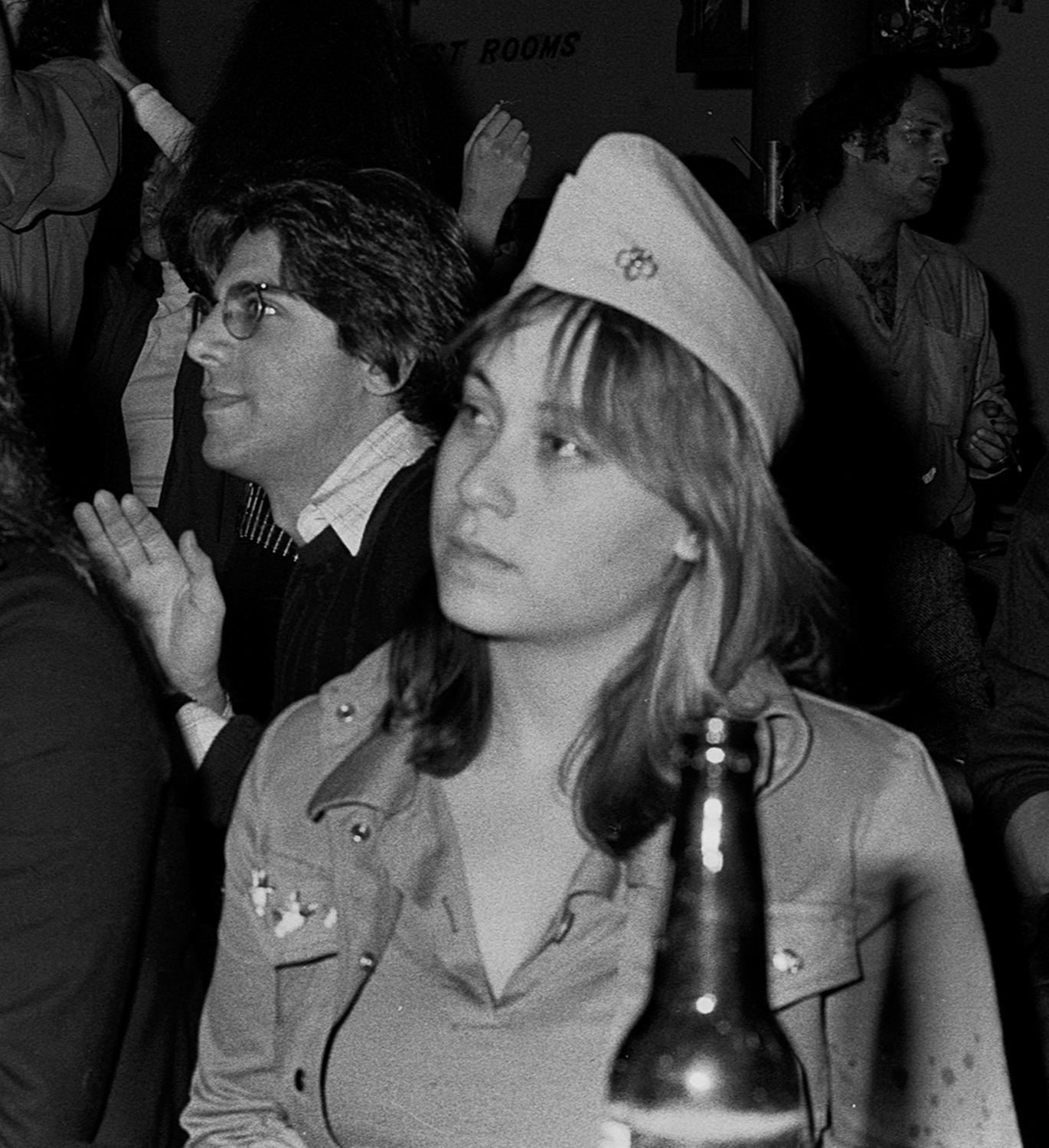
JBL: I’ve known you for a few years now, and I know a good amount about Backstage Pass stuff, but there were many stories I didn’t know about. But I especially find your work as a stylist super intriguing. That’s a perspective in rock ‘n’ roll we don’t get very often. Like the stories being told by someone who was behind the scenes, working so closely with the bands like that.
GS: That was when I started to feel like the real me. My mom was an incredible seamstress. And when I met Tony Laumer, who later married Jake Riviera, she was a seamstress for the band, like that Elton John song “Tiny Dancer.” I was blown over, and that’s when I left the band. I wanted to do what she was doing. That was my inspiration. She was making things like Nick Lowe’s Riddler suit, and I was glued to her side just like I used to be glued to my mother’s side. She was making this green Riddler suit with the question marks. It was like having another babysitter that I was in love with. I was just like, “This is what I want to do! I want to be like her.” And I was her little protégé. So that became the next chapter.
JBL: You really got to know the artists you were working with.
GS: On purpose. That’s who I fell in love with. Not all of them. But a fair amount. The store Strait Jacket became everything – my livelihood, my dating pool.
JBL: I noticed you were always describing people’s shoes and things like that. Were you always into fashion?
GS: Yes. I can remember my mother going to sewing lessons when I was a baby. I was always watching her sew. I would be watching her sew. I had long hair, and I remember getting it caught in the wheel of the sewing machine because I was glued to her side watching her sew. I was always watching and observing – that’s always how I learned to do things. We had a cleaning lady, and she would be ironing, and I would be watching her iron. That’s how I learned how to iron. When I was a child, I had these little petticoat slips, and I thought they looked like amazing dresses. Back then– it’s not like today when you can get your infant something like grown-up– I would draw them. I would draw like tiny go-go boots and Fairchild boots that Cookie would wear. (Cookie was one of Genny’s babysitters.) I would pull them because you couldn’t get them in your size. They didn’t make grown-up clothes and shoes for babies and children back then, like they do today.
JBL: You were always fascinated by style.
GS: Since I was a kid. I would see glitter on the sidewalk and see stars in my eyes.
Jen B. Larson is the author of Hit Girls: Women of Punk in the USA, 1975-83 (Feral House, 2023). Her bands BEASTII, Swimsuit Addition, and Jen & the Dots have performed and recorded extensively since 2010. She is currently a high school teacher in Chicago Public Schools and is working on several musical and writing projects, including a follow-up to Hit Girls.