

Punk Rock and Rock Personalities Series: Jonny Whiteside, L.A. Weekly’s Veteran Journalist
Interview By: Nikki Palimino
Punk Globe: What about music brought you to life?
“When I was about 11 or 12, I saw Big Joe Turner on a PBS re-run of an old Johnny Otis Show. He started shouting “Shake Rattle & Roll” and everything changed. As a teen I couldn’t get into all the hippy crap everyone was playing—I mean, Jefferson Airplane? CSNY, The Dead? It was boring. I got heavily into blues, R&B and rock & roll, Bobby Bland, Jimmy Reed, Chuck Berry and BB King. That music really meant something. After the “Aloha from Hawaii” TV special, I got into Elvis and when “Killer” came out, I went nuts for Alice Cooper.”
Punk Globe: What attracted you to writing? When and why did you choose journalism as a means of expression? Why Los Angeles?
“I always wanted to write. Instinct. It just had to happen. My earliest professional experience was born of necessity. I was broke, living in London, and one of my squat mates was editing a line of adult magazines. He’d give me a description of a photo shoot they were going to publish, and I’d cook up a story. Those were my first paid jobs, 78-79. After punk imploded, I was heartbroken. All that Two Tone skinhead crap blew up. I mean, I’d been taking my life in my hands to go to Sham 69 shows, and one night “Hurry Up Harry,” with that awful piano, was playing like Muzak in a Tesco supermarket; it was a nightmare. I returned to my hometown, Frisco, and eventually started doing a fanzine called Beano with the great photographer-artist Vicki Berndt, who lived around the corner from my apartment in the Hayes Valley. Music was the obvious subject to focus on. I never read Creem or Rolling Stone or anything like that. They didn’t interest me at all.”
Punk Globe: What has been the challenging part of interviewing? How do you pick your subjects, including the books you’ve authored? Talk about your articles and books and how they came to fruition?
“Interviewing bands like the Damned, Gun Club, Fear, and UK Subs was easy and fun. Just show up at soundcheck, and you’re in. Getting to people like Clifton Chenier, Merle Haggard, and the Cramps was pretty terrifying, but they all said yes. The zine took off, we had pretty good national distribution, and I started writing for New York Rocker—Andy Schwartz has always really helped me out professionally—and after that, Boston Rock, Spin, some other rags. Subjects always sort of chose themselves, if it was genuine and exciting, whether it was Roy Orbison or the Bad Brains, I’d go for it.”
“The veneration of boring sacred cow millionaires, Beatlemania, Dylan, all that awful crap made me sick. All of a sudden, Springsteen was on the cover of Time and Newsweek simultaneously? I began to realize how much corporate revisionism had screwed up documentation of American music, and that led me to write books about real trailblazers, revolutionaries like 1940’s honky tonk rockers Maddox Brothers and Rose and Johnnie Ray, the crazy, piano-smashing, half deaf queer who was really the missing link between Sinatra and Elvis. Researching these was an incredible experience, interviewing people like Patsy Montana, Bill Monroe, Webb Pierce, Mitch Miller, LaVern Baker, and Tony Bennett. Fabulous stuff.”
Talk about the developing changes in the Los Angeles music scene, the clubs, the artists showcased, and the fans? What’s better, and what is lacking?
“Music in LA is always such a flabbergasting swamp of contradictions. There are so many ridiculous wannabes and squandered opportunities, all this canned, lifeless DJ and EDM garbage. Los Angeles is one of the greatest ever music towns, and people profess to love and uphold our regional heritage, but whether it’s garage rock or country music, most end up as ridiculous self-parodies. We’ve got way too many Viper Rooms and far too few Redwoods, but it all works out, and there’s always a good amount of high-quality, original up-and-coming rockers. Have you heard Pedal Strike? Amazing band, incredible performers.”
Punk Globe: As a veteran journalist, tell us about the changes from press to online, good, the bad, and the nature of publishing? Talk about magazines like L.A. Weekly and how you got involved with them, and what local papers like that offer a reader.
“For the artist. Publishing is the only thing worse than the music business, money-wise. The degeneration of thought and quality we see today is shocking. I can’t believe the clueless nimrods who get shit in print. I hate blogging, but more and more that’s we are all doing. The papers and mags themselves are increasingly fixated not on quality content, but on feeding a specific demographic. I mean, I’ve always said music journalism is essentially the same as writing pornography—you are addressing the same subject, over and over, and have to make it interesting and fresh every time out, but that analogy today has lost most of its charm.”
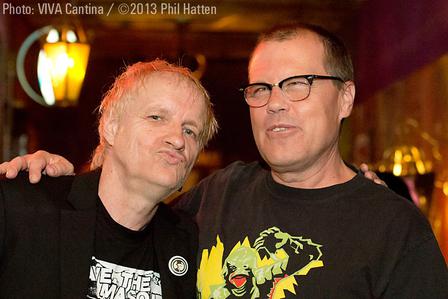
“The Messaround began life as my 50th birthday party. I got together some friends and bands for a big blowout on a Sunday afternoon at Viva Cantina, and it was a blast. At one point, Simon Stokes, the infamous 60’s psych-garage genius, performed “Waltz for Jaded Lovers” for the first time in something like 25 years. It’s a hyper-hard rock tune about suicide with lots of profanity and screaming, and all the square regulars back at the bar wanted to call the cops and shut us down. I knew we were onto something. Cody Bryant called me up a few days later and asked me if I’d like to do it once a month. Viva was on the brink of receivership at the time, and the Messaround lit a fire under Cody and they’ve been doing great ever since. That was 7 years ago. We mess every third Sunday, it’s always free and all ages, with a weird mix of bands.”
“I am extremely proud of the ‘mess. It’s sort of like a distillation of everything I love about music. We’ve had some wild ass shows—a lot of punk, the Mau Maus, the Gears, the Skulls, 647-F, lots of killer old timers, Del Casher the wah-wah innovator, lounge wildo Troy Walker, the fantastic 60’s pop-soul singer Evie Sands, beautiful 70’s soul brother Nolan Porter, 60’s Sunset Strip rioters the Sloths, Yellow Payges, Davie Allan, the black 50’s rocker Eddie ‘Ghetto Baby’ Daniels, who worked with Eddie Cochran, Ian Whitcomb, we had Freddy ‘Boom Boom’ Cannon with the Gears backing him–flabbergasting. When I got Little Richard’s original drummer, Charles “Keep A-Knockin” Connor, on the show, we needed someone to sing “Tutti Frutti,” so I emailed Pat Boone’s office. I already knew Pat through Jimmy Angel, and I knew he’d do it. It was unbelievable, he wailed on it for about 12 minutes, everybody flipped out.”
“One thing we don’t do is rockabilly. The only rockabilly act I’ve used is Ray Campi, and he helped invent it in Texas back in the 50’s. Also, no weak goddamn so-called Americana. Go to the Grand Ole Echo for that shit. We do country—Billy Eli, Cary Park, Tonya Watts, Freight Shakers, Patty Booker, Groovy Rednecks. We’ve had plenty of great teenage bands—Wolf Woodcock’s Leaking Pigs, just phenomenal. And I mean little kids—Lock/Jaw, the Paramounts, The Peeks, with Chip Kinman’s kid Dewey, played their first show ever on the ‘mess and destroyed the place. Now Dewey has the incredible Katellas and plays with Chip in FDMDXFD, all of whom we’ve had on the show. Pearl Harbour played her farewell gig with us—she was amazing. So many good bands here in LA to choose from, LoveyDove, the Bloody Brains, Shag Rats, Crazy Squeeze, Satan’s Cheerleaders, South Bay Surfers. It’s like a big, messed-up, dysfunctional family, and I wouldn’t have it any other way.”