

DVD & BLU RAY REVIEWS
Reviews by JAIME PINA
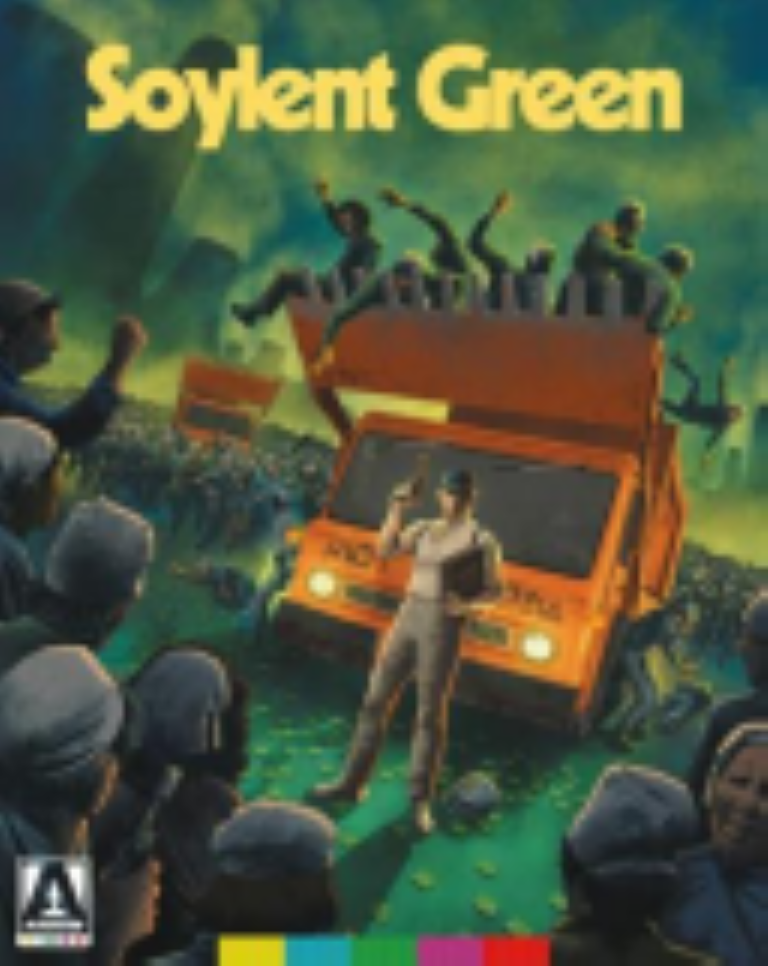
Soylent Green
Arrow Films
In the 50’s and 60’s, Charlton Heston starred in epic sagas like THE TEN COMMANDMENTS, BEN-HUR, EL CID, and THE GREATEST STORY EVER TOLD. In 1968 he switched gears and starred in PLANET OF THE APES and this started him on a journey into appearing in a handful of cynical, dystopic Sci-fi films including BENEATH THE PLANET OF THE APES, THE OMEGA MAN and winding down with SOYLENT GREEN. Produced in 1973, the film was based on the book Make Room! Make Room! and was directed by Robert Fleischer (20,000 LEAGUES UNDER THE SEA, MR. MAJESTYK, MANDINGO, AMITYVILLE 3-D). Heston plays a detective in 2022 New York City, where global warming and overpopulation have made life a hell on earth. A wealthy man, played by Joseph Cotten (THE THIRD MAN, NIAGRA, THE ABOMINABLE DR. PHIBES) is murdered, and Heston starts investigating with some help from his assistant, played by Edward G. Robinson (LITTLE CAESAR, KEY LARGO). Due to pressure from a NYC governor portrayed by Whit Bissell (CREATURE FROM THE BLACK LAGOON, THE CAINE MUTINY, I WAS A TEENAGE FRANKENSTEIN) the case is supposed to be closed, but Heston continues to investigate and ends up sorry when he puts all the pieces together and loses everything.
It is an ugly film. It is ugly all the way down the line on many levels. There is the subject matter and the end reveal. The sets are all filthy, with the police department looking like a seedy, rundown hotel lobby. Almost everyone sweats profusely in grimy clothes. Stairways are crowded with people trying to sleep, and during the daytime shots, there is a green haze permeating the air. It is a very sexist film with women being referred to as “furniture” and behaving like willing playthings. Heston’s detective is especially slimy when not with Robinson. While questioning people at the crime scene he takes a pillowcase and starts filling it with items from the deceased’s abode while demanding just the facts. This was long before the film ALIEN depicted a spaceship like what it would really look like after all the movies with clean white surfaces in every spacecraft interior and exterior. It serves the film as the story is grimy and bleak. Other cast members include Chuck Connors (THE RIFLEMAN), Dick Van Patten (SPACEBALLS), and the charismatic Leigh Taylor-Young (I LOVE YOU, ALICE B. TOKLAS).
As stated, the film was made to look grimy, and the new 4K restoration reflects that. The mono sound is fine. The extras are a little skimpy compared to most Arrow releases and include audio commentary by Fleischer and Taylor-Young, footage of Heston and Fleischer at the BFI, a vintage featurette and a vintage MGM tribute to Edward G. Robinson. SOYLENT GREEN was his final film role. If you are fond of this film, then this release is something you will want on your shelf. The end credits are delicious!
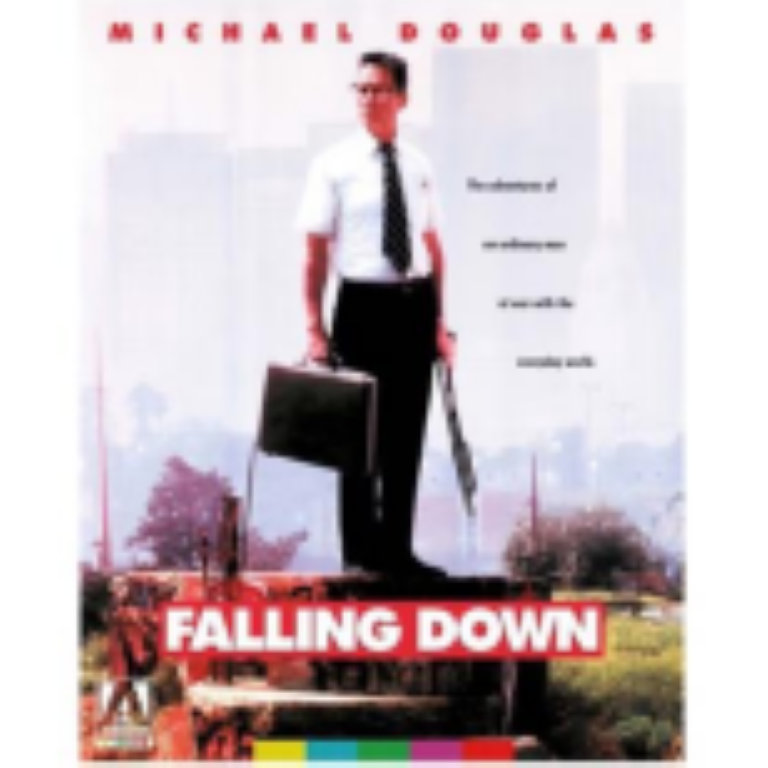
Falling Down
Arrow Video
This film has a certain power to it that spans time. Towards the end of filming, the production was interrupted by the riots brought on by the Rodney King tragedy. And that was important because the film deals with a lot of the frustration and wrong-headed beliefs that fueled the riots back then and influence a lot of what is going on today. Michael Douglas (WALL STREET, BLACK RAIN) plays a man only identified in the film by his personalized license plate, DE-FENS. As the film opens we see him stuck on a Los Angeles freeway during a bad traffic jam. We learn that he is a divorced, patriotic but now unemployed defense worker and his fuse is at an end. He has a crew cut that is the same hair style as Otto in REPO MAN, nerd glasses, a short sleeved white shirt with a necktie and a pocket protector filled with pens. His air conditioning gives out, the noise and lack of forward movement get to him and he abandons his car. A motorcycle cop arrives to see what the holdup is after the traffic starts to move and a man a couple of cars behind played by Robert Duvall (APOCALYPSE NOW, THE GODFATHER, THX-1138) introduces himself as a fellow police officer and as he makes a note of the license plate helps push the abandoned car to the side.
Bringing in elements of THE WARRIORS and THE SWIMMER, De-Fens decides he is going to “walk home” and starts making his way on foot toward the west and encounters situations that add to his already delicate mental state. As the bodies start piling up and the violence
and his intentions become darker, the plainclothes cop from the freeway starts to piece together the chain of incidents that eventually lead him to De-Fens. The performances by the two actors with their stories slowing intertwining and the incredibly smart script by Ebbe Rowe Smith elevate what could have been a standard vigilante thriller into something much deeper that still resonates. Duvall’s character starts out as kind of a goofy guy and a bit of a cuckhold but blossoms into a real hero. And as far as De-Fens, writer Smith and the performance by Douglas lead the audience on an emotional rollercoaster ride. While knowing he is pretty much a fuckhead, you can’t help but pity him and actually root for him as in the incredibly tense scene with Frederic Forrest (IT LIVES AGAIN, THE CONVERSATION) as the homophobic, neo-Nazi. All of the acting in this film works and Tuesday Weld (SEX KITTENS GO TO COLLEGE, SOLDIER IN THE RAIN, LORD LOVE A DUCK, Tuesday Wednesday on THE FLINTSTONES) turns in an especially brave performance against type. Directed by Joel Schumacher (DC CAB, THE LOST BOYS), this is his best film in a resumé filled with clunkers.
The new 4K restoration looks and sounds fantastic. The crisp picture and sound really burn the images of a hot day gone wrong into your brain with the scene featuring Vondie Curtis-
Hall, as the “Not Economically Viable” man especially effective. There are plenty of tasty extras, including archival audio commentaries by director Joel Schumacher, editor Paul Hirsch, screenwriter Ebbe Roe Smith, and actors Michael Douglas, Michael Paul Chan, Vondie Curtis-Hall, and Frederic Forrest. But the real jewels of the bonus features include a brilliant locations then and now featurette by Gillian Wallace Horvat, an interview with writer Ebbe Roe Smith and an interesting 1992 interview with Douglas.