

Dave Markey Tells All About The Filming About Bill Bartell
Interview By: Jaime Pina
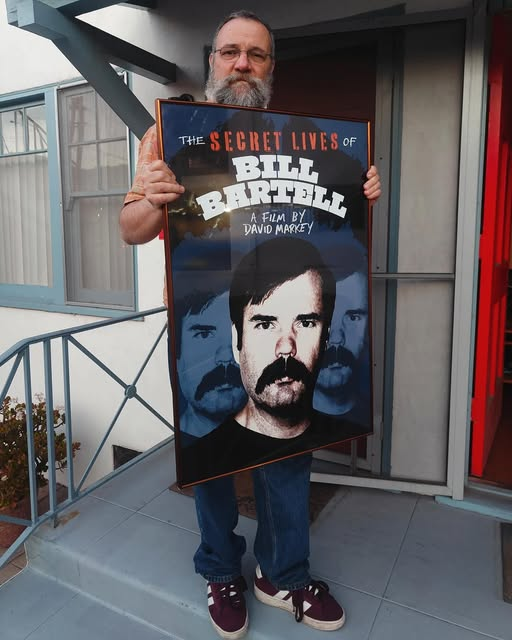
Dave Markey took some time to answer questions about Bill and his excellent film. I hope you dig it.
Punk Globe: Were you thinking of doing a film on Bill before his passing?
Dave Markey: Yes. I first had the idea and the title in 1994, and I actually started shooting, but it was clear Bill wasn’t going to cooperate. He walked out of the first interview. And we see that in this film, but it’s not really explained.
Punk Globe: Were there any interviewees who ended up on the cutting room floor, and did anyone refuse to be interviewed for the film?
Dave Markey: Every interview that was shot was used in the film, at least to some capacity. We lost one interview due to a faulty card; it wasn’t a crucial one, so we didn’t bother reshooting
Punk Globe: Did you approach Gene and Paul (of Kiss) to be interviewed?
Dave Markey: I was considering it, but knew it would be difficult to arrange. It might have been interesting, but apparently, they were aware of Bill and reportedly weren’t keen on him. Rebecca Sevrin, who worked with Kiss in later years, told us they gave photos of Bill to their security, stating, “If you see this guy backstage, throw him out.” In all fairness, he had been stalking them for decades.
Punk Globe: Why were the White Flag music videos not included as bonus features?
Dave Markey: This isn’t a White Flag film per se, it’s a film about Bill Bartell. And yes, White Flag was a major part of Bill’s life’s work. But we already see so much of it in the course of the film. Actually, going into the film, I at first thought there would be way less White Flag in it than there ended up being.
Punk Globe: The outtakes are very entertaining. Were there any of those stories you struggled with cutting out?
Dave Markey: In the course of making the movie, I had to construct a cohesive narrative from 75 hours of interviews. While so many of the stories were great, if they didn’t fit in the bigger overall story, it just would’ve slowed the narrative down. The big picture mattered most to me.
Punk Globe: I enjoyed the film, but feel it raises more questions than it answers. Did you feel this way at the end, and was this your intention?
Dave Markey: Obviously, there are stories that we’ll never know about Bill, and there are people we will never know, or be able to track down. He left no paper trail for much of his life. The mystery was often kept further under wraps by the passing of people we had lined up to interview, such as Bill’s brother and Howie Pyro. His one documented relationship, for example. There was no direct trace of this person. None. No name, just a photo his friend once saw. Another example is that no one inside the Beaumont Police Department would speak to us. We even had one lined up, but he backed out. I tried in earnest to make that happen. But the order of law enforcement is very protective and secretive, not unlike how Bill was himself. It’s more of the end result of how Bill lived his life.
Punk Globe: Thanks for answering my questions, Dave